
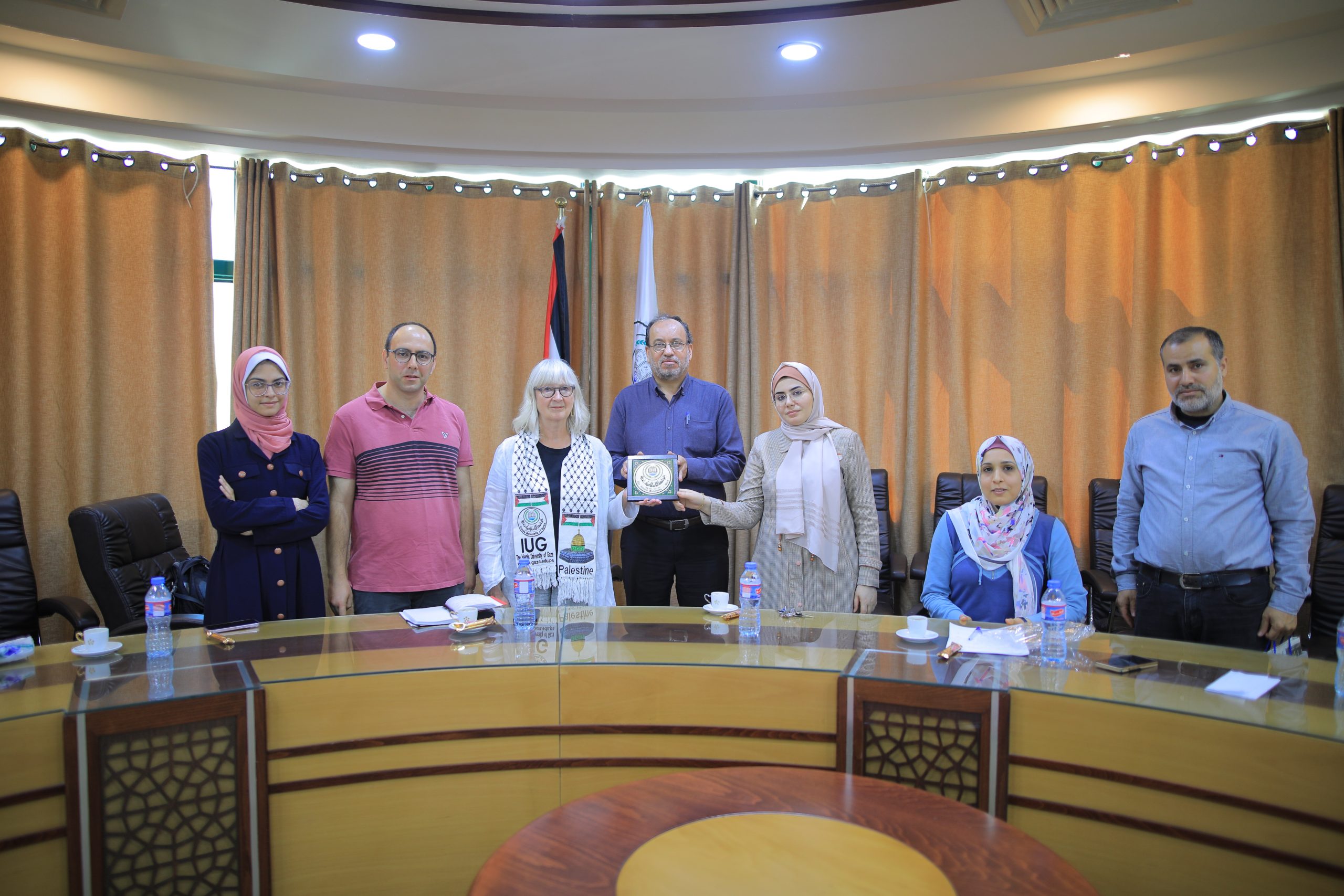
Professor Caroline Knowles, Director of the British Academy Programme: Urban Infrastructure of Well-Being (2019–22), visited the Islamic University of Gaza. She was welcomed by Dr. Mohammed Abu Haiba, Director of the Project “Mitigating the Impact of the Energy Crisis in Gaza on the Population Wellbeing through Sustainable Electricity Generation Technology,” Dr. Talib Al-Rayyes, Director of the Research and Projects Center at the Faculty of Engineering, Engineer Amani Al-Maqadma, Head of the External Relations Department, and Ms. Walaa Safi, Coordinator of International Exchange Projects at the university.
The purpose of the visit was to evaluate the impact of the project funded by the British Academy, which is being implemented from 2019 to 2023 in partnership with the University of Birmingham in the UK and the Islamic University. Dr. Abu Haiba spoke about the project, which aims to assess the effects of electricity shortages on health and well-being in Gaza and develop a new engineering solution for the community to use as a test station for electricity production using solar energy.
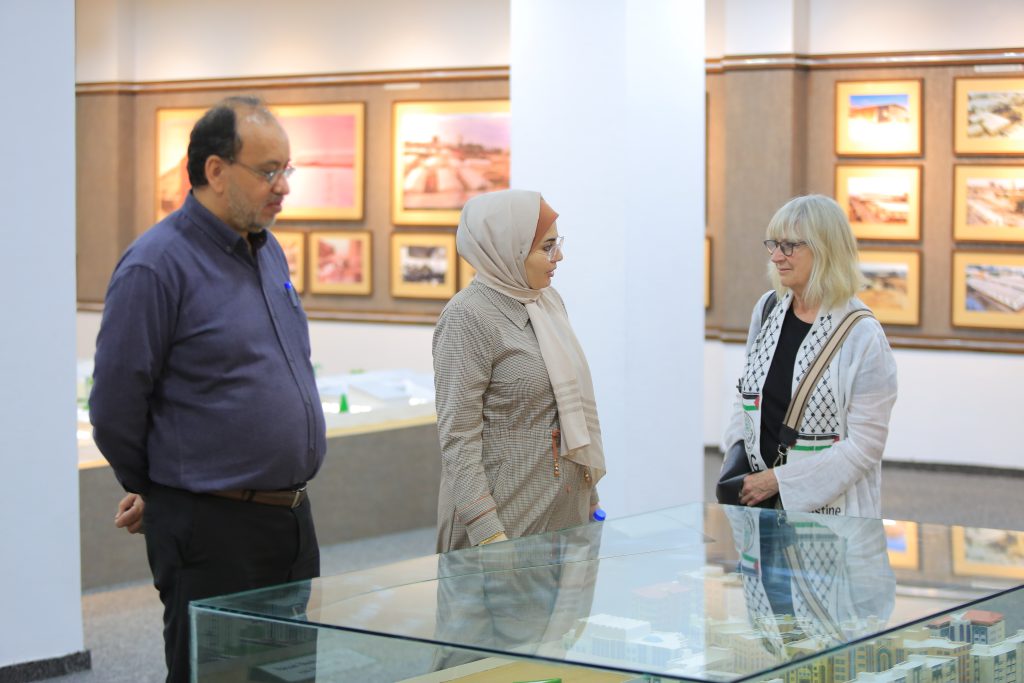
Engineer Al-Maqadma welcomed Professor Knowles, emphasising the importance of the project in alleviating the severity of the electricity crisis for the population and refugees in Gaza and their living conditions, while focusing on the specific needs of the community. She also highlighted the Islamic University’s partnership with universities around the world as part of various international cooperation programmes, particularly British universities, which date back to 2004 as part of the European Tempus programme. These partnerships have since expanded to include projects under Erasmus Plus, UK Research and Innovation (UKRI), the British Council, the Arts and Humanities Research Council (AHRC), and other funding programmes in various fields, including humanities and social sciences, engineering, gender, and multiple specialised areas. The number of partnerships with British universities has reached 15 through participation in more than 30 international cooperation projects.
Ms. Safi presented a presentation about the Islamic University, which aims to be a scientific, cultural, and community beacon with the aim of achieving comprehensive social development. She highlighted the most important achievements of the university’s faculties and centres, as well as the international dimension of the university and its multiple partnerships around the world. She pointed out that the Islamic University carried out an international exchange project with the University of Glasgow in Britain, which is considered one of the largest projects and provided fifty exchange opportunities for the staff and students of the Islamic University. She emphasised the university’s efforts to strengthen these partnerships with British universities.
A discussion took place about the strategic orientation of research funding in Britain and the importance of international cooperation. Dr. Al-Rayyes noted the importance of joint scientific research, especially those that combine scientific disciplines and social and humanistic specialties to describe the effects on human societies.
It is worth noting that Dr. Knowles visited the project implementation site (solar power plant) at the Women’s Health Centre, affiliated with the Red Crescent Society in Jabalia Camp, and listened to the opinions of women at the centre and in neighbouring houses about the importance of the project and the impact it had on them in reducing the severity of the electricity crisis and the psychological and social dimensions of this crisis.
Professor Knowles praised the project and its management, as well as the Islamic University and its diverse partnerships under difficult circumstances and limited resources.
Overall, the visit of Professor Caroline Knowles, Director of the British Academy Programme: Urban Infrastructure of Wellbeing, to the Islamic University of Gaza highlights the importance of international cooperation and joint scientific research in addressing pressing societal challenges, such as the electricity crisis in Gaza. The partnership between the Islamic University and British universities, including the British Academy, has led to numerous projects aimed at promoting social development and well-being in the region. The visit also underscores the impact of the project funded by the British Academy on mitigating the impact of the energy crisis on the population’s health and well-being through sustainable electricity generation technology.